Edo Castle and the History of the Tokyo Imperial Palace
Edo Castle tokyo: how the Tokugawa shoguns' seat became the Imperial Palace in 1868, what fire and war destroyed, and what's left to see today.
Edo Castle was the Tokugawa shoguns' seat of government for 260 years, built in 1457 and renamed the Imperial Palace in 1868 when the emperor moved in; fire and war destroyed most of its buildings, leaving stone walls and a climbable keep foundation.
 Imperial Palace East Gardens Walking Tour From $6.26 · Cheapest guided walk See dates
On this page 8 sections
Edo Castle tokyo is the fortress that became the Imperial Palace, and almost every “is it worth visiting” question about the palace today traces back to what that transition did and didn’t leave standing. I’d read this page before the gardens page, because knowing what’s actually gone changes what you expect to find.
Edo Castle and the palace, in numbers
Source:Japan National Tourism Organization and WikipediaWhat Was Edo Castle Before It Became the Imperial Palace?
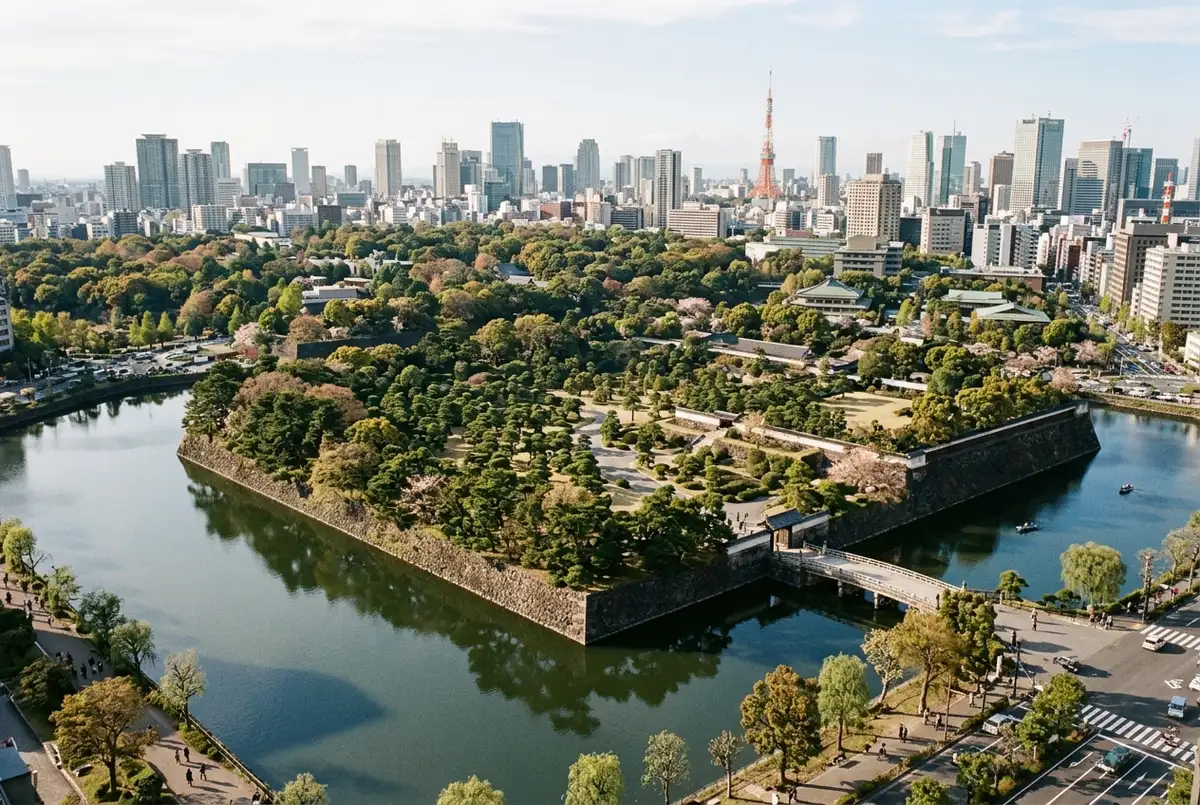
The Tokugawa shoguns’ seat of government. Edo Castle was built in 1457 by Ota Dokan, and after warlord Tokugawa Ieyasu took possession of the castle in 1590, it became home to the Tokugawa shoguns for 260 years, the center of Japan’s politics and much intrigue. At its largest, the inner compound alone measured eight kilometers in circumference, with the outer compound extending to around 16 kilometers, making it the biggest castle complex Japan ever built.
How Did Edo Castle Become the Tokyo Imperial Palace?
The shogunate fell, and the emperor moved in. After the shogunate’s collapse, the emperor moved to the former castle in October 1868, and the site was renamed Tokyo Castle, then Imperial Castle the following year, as part of the Meiji Restoration that ended centuries of shogunate rule.
What Happened to Edo Castle?
Fire took the keep, and later fires and the war took more. The original keep burned in the Great Fire of Meireki in 1657 and was never rebuilt, and the castle site suffered substantial damage during World War II and the destruction of Tokyo in 1945. A separate fire also destroyed the Nishinomaru Palace in 1873.
| What | Happened | What’s left today |
|---|---|---|
| Main keep | Burned in the 1657 Meireki fire | Stone foundation platform, climbable |
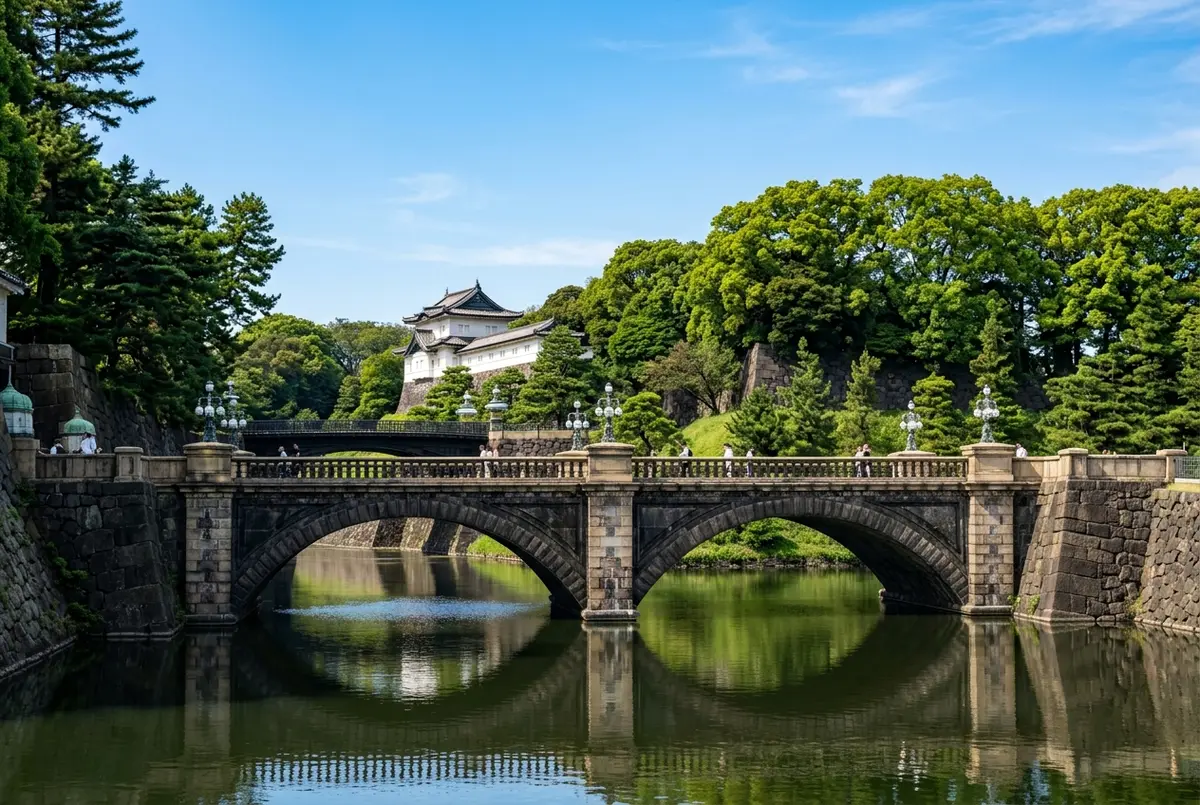
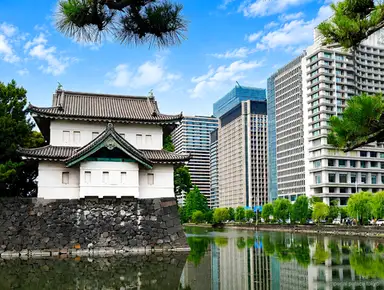
| Fujimi-yagura watchtower | Built 1659 as a substitute for the keep | Still standing |
| Nishinomaru Palace | Burned in 1873 | Site of the current Imperial residence |
| Wider grounds | Damaged in the 1945 bombing of Tokyo | Now the East Gardens and the outer plaza |
“Edo Castle was struck by a big fire, and unfortunately was never rebuilt.”
Chiyoda Tourism Association · source
Can You Go Into Edo Castle Today?
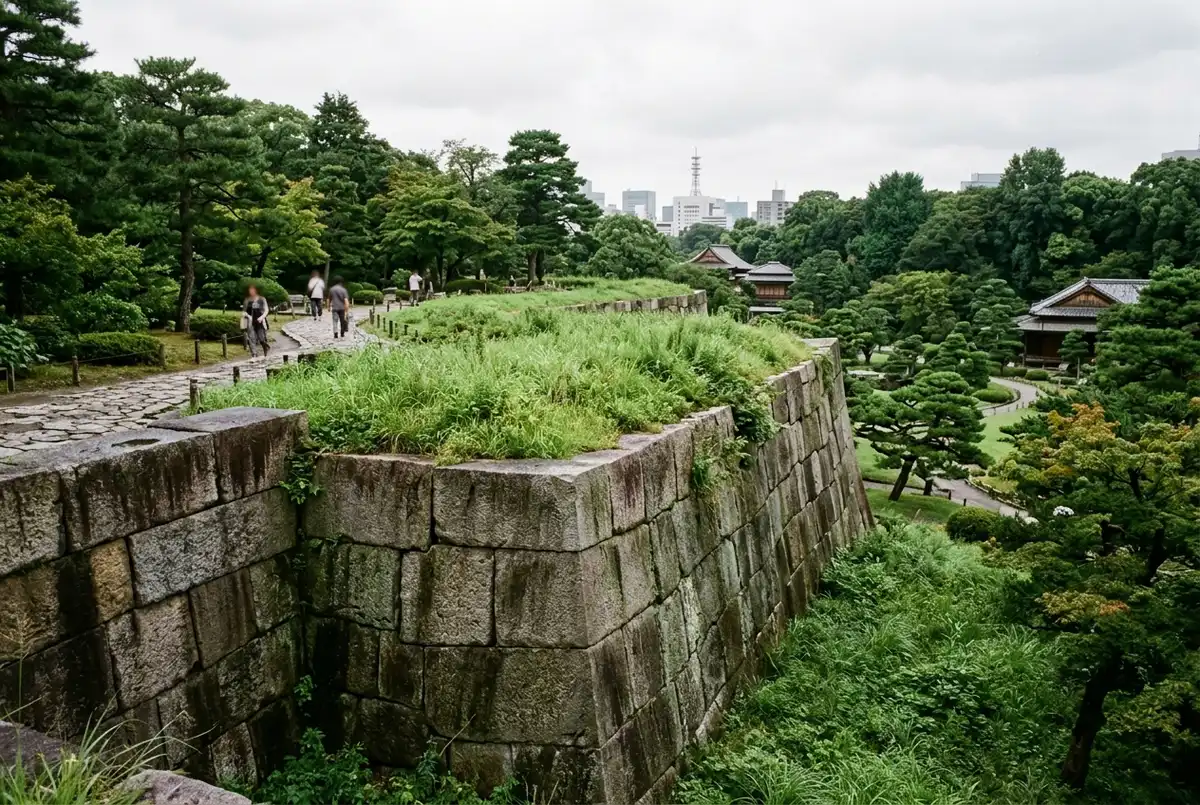
The buildings are gone, but the ground isn’t. The East Gardens, built on the old Honmaru, Ninomaru and part of the Sannomaru compounds, are free to enter and include the stone keep foundation, the Tenshu-dai, which you can walk up onto.
Picture standing on that stone platform, roughly 51 meters below where Japan’s tallest castle keep once stood before the 1657 fire, looking out over the Ninomaru Garden instead of a seven-story tower. That gap, between what the word “castle” promises and what’s actually left, is the whole story of this site in one view. For what else you can and can’t see up close, see what’s inside the Imperial Palace.
Why Is Tokyo No Longer Called Edo?
Because the city was renamed along with the castle. Edo was the city’s name under the Tokugawa shoguns, and when the emperor moved there in 1868 the city, and the castle compound, took the new name Tokyo as part of the Meiji Restoration.
How Old Is the Tokyo Imperial Palace?
The site is nearly 570 years old; the palace itself is younger. The grounds have been fortified since 1457, but the Imperial Palace dates from 1868, when the emperor took up residence, making the palace itself roughly 158 years old on a much older site.
Are There Other Historic Castles Left in Tokyo?
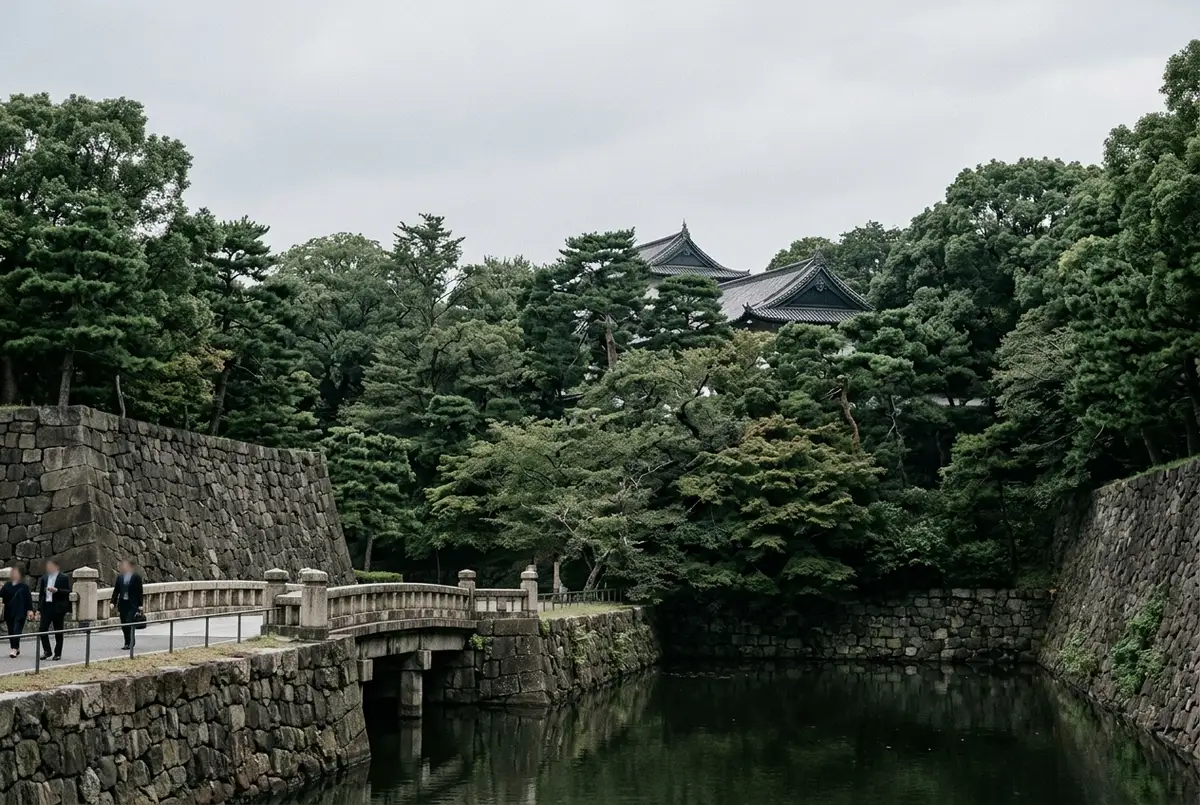
Not many, and this is the main one. Edo Castle’s stone walls and surviving gates, now inside the Imperial Palace grounds, are the main castle fabric left standing in central Tokyo, since most of the city’s other Edo-period fortifications were cleared for later development.
Who actually lives inside the grounds today is a separate question from this history, covered on who lives in the Imperial Palace, and for the size of what’s left standing, see how big the Imperial Palace is. If you’d rather have someone walk you through this history on site, a small-group history walking tour covers the castle ruins and the East Gardens in person, priced from $37.58.
For whether any of this is worth building a trip around, see visiting the Imperial Palace, and for the grounds you’d actually walk through, see the grounds and gardens overview.
Questions
Is Edo Castle the same place as the Tokyo Imperial Palace?
Yes, it’s the same site under a different name. Edo Castle became the Imperial Palace in 1868, after the Meiji Restoration.
How tall was the original Edo Castle keep?
The keep stood 51 meters tall, reportedly the tallest castle tower in the country. It burned in the 1657 Meireki fire and was never rebuilt.
When was the Fujimi-yagura watchtower built?
It was built in 1659, two years after the fire. It took on the keep’s role as the grounds’ most prominent remaining tower.
Did Emperor Meiji move into the former castle right away?
Not into a finished new palace. Emperor Meiji lived in the Nishinomaru Palace near the East Gardens from 1869 to 1873 before a purpose-built palace was ready.