Nijubashi Bridge: The Palace's Most Photographed Spot (and Why You Can't Cross It)
Nijubashi Bridge is the Imperial Palace's iron bridge behind the stone one everyone photographs. Here's why it stays closed and when it opens.
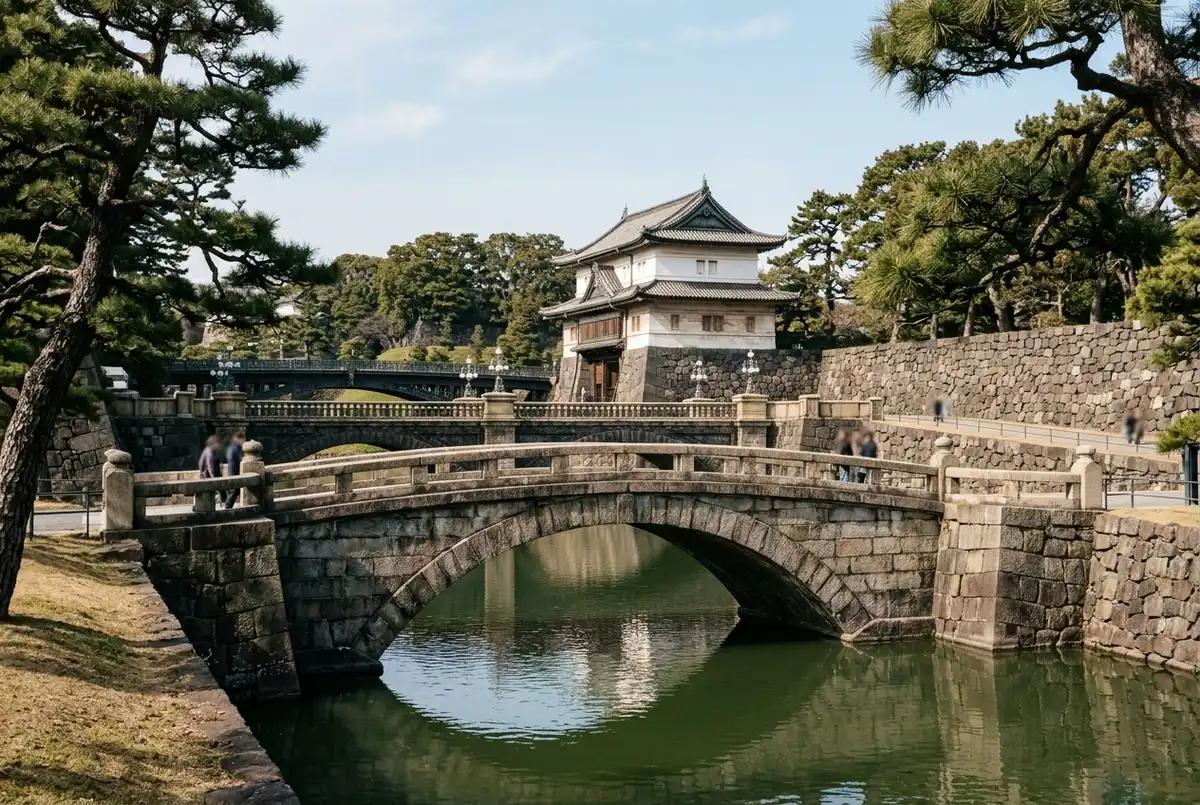
Nijubashi Bridge is the iron bridge behind the stone Seimon-ishibashi bridge in every classic photo, officially named Seimon-tetsubashi, and it stays closed to the public outside ceremonies and two set days a year.
 Imperial Palace East Gardens Walking Tour From $6.26 · Cheapest guided walk See dates
On this page 7 sections
Nijubashi Bridge is the name most people give to the whole scene in front of the Imperial Palace’s main gate, but it technically names only one of the two bridges there. I’d learn which is which before you post the photo, because the distinction is the first thing anyone local will correct.
Nijubashi in numbers
Source:Chiyoda City Tourism Association and Ministry of the EnvironmentWhat is Nijubashi Bridge?
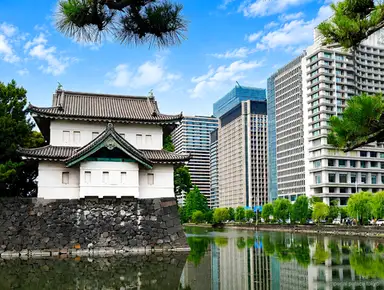
The iron bridge in the background, not the stone one in front of it. There are two bridges at the main gate: the iron Seimon-tetsubashi bridge visible in the background, and the stone Seimon-ishibashi bridge in the foreground, and the name “Nijubashi” officially refers to the Seimon-tetsubashi bridge, the one most people never actually look at directly.
| Bridge | Material | Built | Current structure | Public access |
|---|---|---|---|---|
| Seimon-ishibashi (stone, foreground) | Stone | 1624-1627 | Rebuilt 1889 | Viewed from the plaza only |
| Seimon-tetsubashi / Nijubashi (iron, background) | Iron | 1888 | Rebuilt 1964 | Viewed from the plaza; crossed only on set days |
“The well-known 'Nijubashi' usually indicates this 'Steel Bridge of the Main Gate'.”
Ministry of the Environment, Japan · source
Can you cross the Nijubashi Bridge?
Not on an ordinary visit. Both bridges sit on private Imperial grounds and stay closed to the public outside official ceremonies and two set days a year.
Can you walk on Nijubashi Bridge?
Only through a tour or on those two days. You can cross it by joining the Imperial Household Agency’s General Visit program, held twice a day Tuesday through Saturday, or by attending one of the two annual public open days.
Say you’re standing at the plaza on an ordinary Tuesday afternoon, looking at the bridge from behind the rope line. I’d weigh coming back for the free General Visit tour, which also takes you past the Fujimi-yagura watchtower, against waiting for one of the two annual open days, which only happen once each. For most visitors on a short trip, the tour is the realistic option.
Why is it called Nijubashi (double bridge)?
Because of how the Edo-period bridge was built underneath. The Edo-era wooden bridge was reinforced with extra wooden beams, creating a doubled, stacked structure, which is why people started calling it the “double bridge,” or Nijubashi.
When is Nijubashi Bridge open to the public?
Twice a year, on fixed dates. The grounds open via Nijubashi on January 2nd for the New Year greeting, held five times across the day in 2026, and again on the Emperor’s Official Birthday. I’d confirm the exact birthday date each year directly with the Imperial Household Agency, since it changed when the current Emperor took the throne and some older pages still list the previous Emperor’s date.
What is the stone bridge in front of Nijubashi?
That’s Seimon-ishibashi, the bridge in every photo’s foreground. It’s a granite bridge first built between 1624 and 1627, and rebuilt in its current Western-style form in 1889, standing in front of the iron Nijubashi.
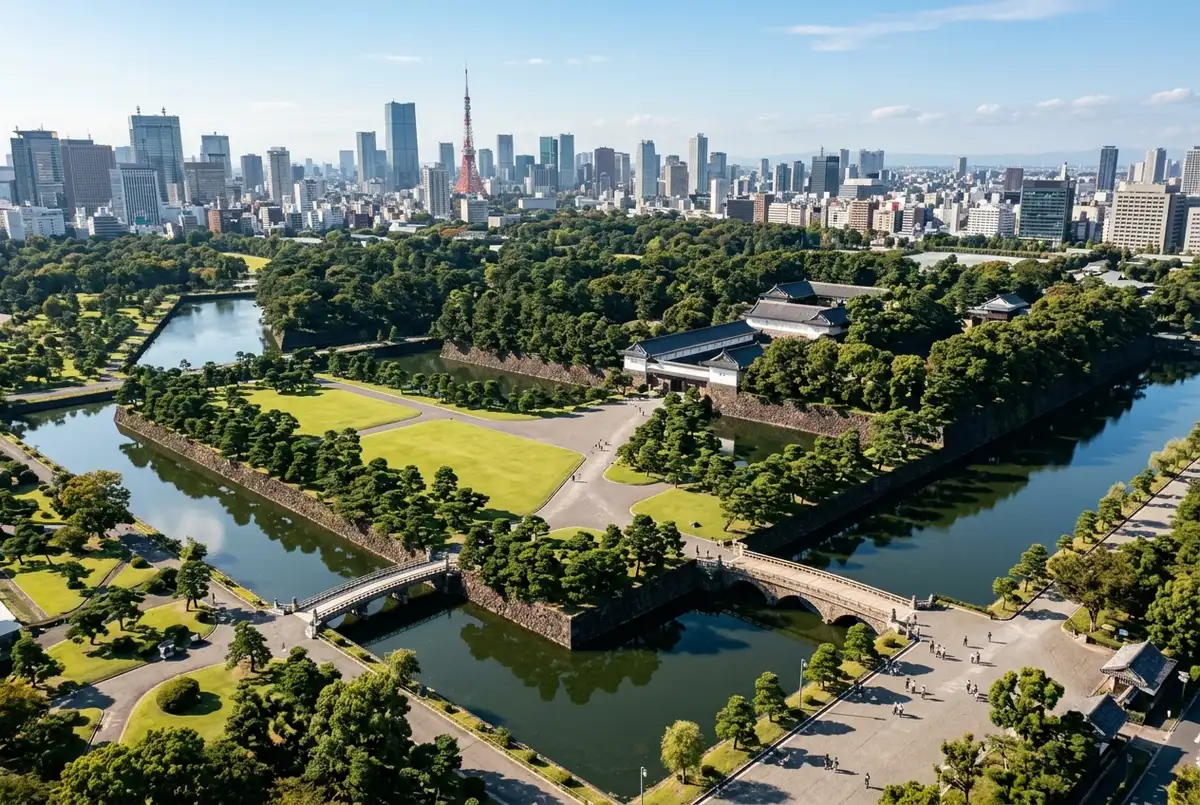
For the plaza you take this photo from, see Kokyo Gaien National Garden, and for the East Gardens you reach through a different gate entirely, see the East Gardens. For how this fits with the rest of the grounds, start at the grounds and gardens overview.
Where the stone bridge sits
Open in Google MapsQuestions
Is Nijubashi Bridge free to visit?
Yes, viewing it from the plaza costs nothing. The General Visit tour that lets you cross it is also free.
What is the history of Nijubashi Bridge?
The current iron bridge dates to a 1964 rebuild of an 1888 original. The stone bridge in front of it was rebuilt in 1889, on a site first bridged in the 1620s.
Is Nijubashi the same bridge as the one called Meganebashi?
No official source used here confirms that name for this bridge. I’d treat “Meganebashi” as a separate local nickname rather than an official alternate name.
How far is Nijubashi Bridge from Tokyo Station?
It’s roughly a 15-minute walk through Kokyo Gaien. If you’d rather take the subway most of the way, it’s a 2-minute walk from Sakuradamon Station.