Kokyo Gaien: The Outer Plaza Where You See the Palace
Kokyo Gaien National Garden is the free plaza by the palace moat: the Nijubashi view, the Kusunoki statue and 2,000 pine trees.
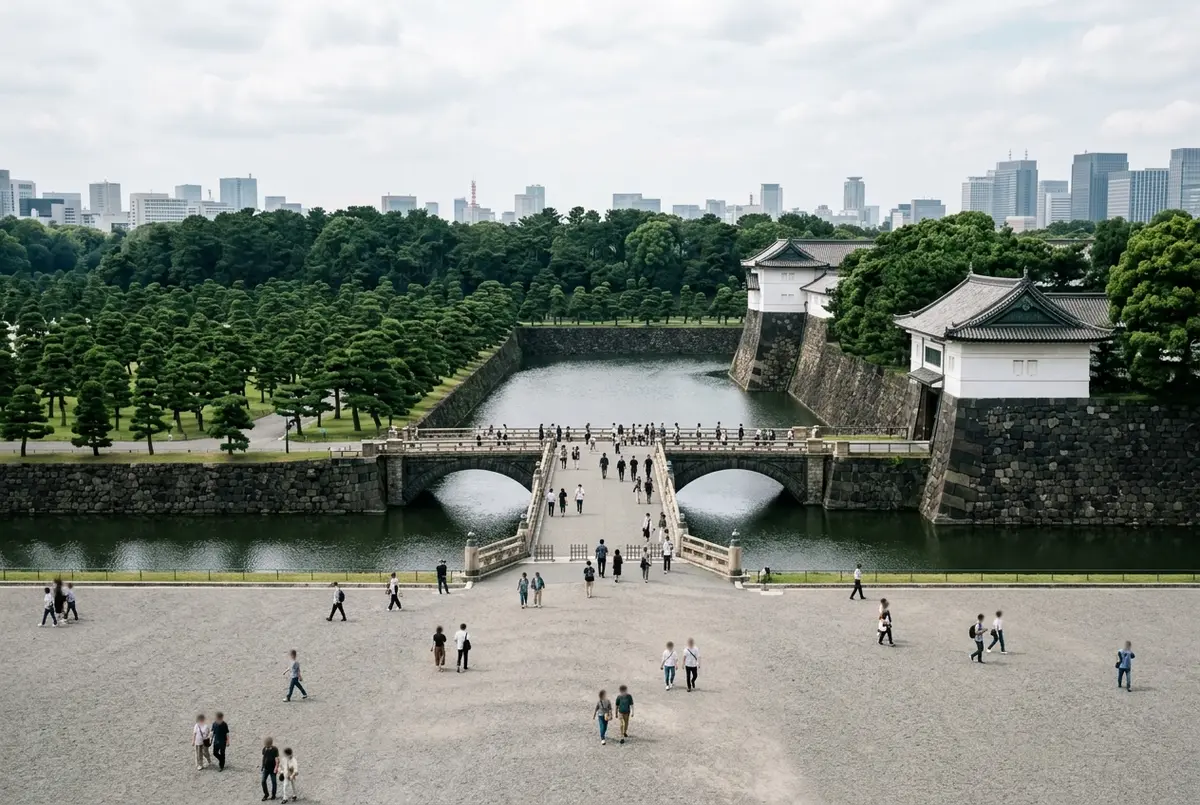
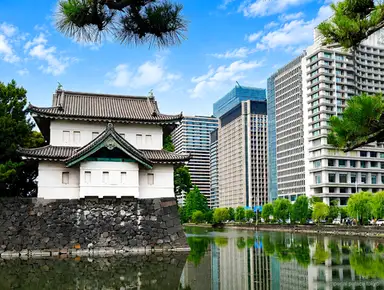
Kokyo Gaien National Garden is the free, always-open plaza ringing the Imperial Palace, where you get the classic Nijubashi view, a bronze samurai statue and about 2,000 pine trees planted over a filled-in bay inlet.
 Imperial Palace East Gardens Walking Tour From $6.26 · Cheapest guided walk See dates
On this page 8 sections
Kokyo Gaien National Garden is the open plaza and garden ring that sits in front of the Imperial Palace, free to enter at any hour, with no gates to pass through. It’s the space most visitors photograph the palace from, even if they never learn its name.
Where the plaza sits
Open in Google MapsWhat is Kokyo Gaien National Garden?
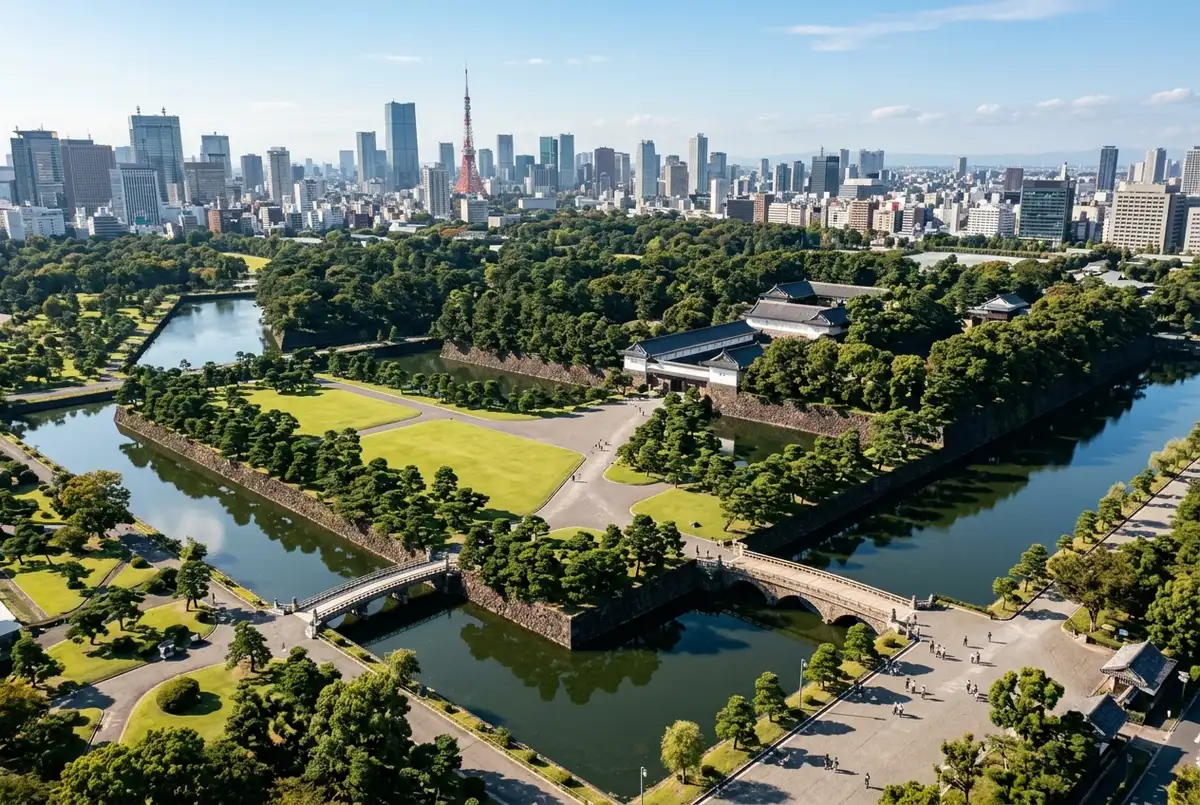
A roughly square-kilometer national garden that rings the palace. The grounds include a landscaped plaza in front of the palace, 12 moats, and Kitanomaru Garden, and were all once part of Edo Castle, managed today by Japan’s Ministry of the Environment rather than the Imperial Household Agency.
Kokyo Gaien in numbers
Source:Ministry of the Environment, Government of JapanIs Kokyo Gaien the same as the Imperial Palace grounds?
No, and this is the mix-up I’d clear up first. Kokyo Gaien is the always-open outer plaza and garden; the Imperial Palace’s own grounds, and the separately gated East Gardens inside them, are a different, more restricted space with their own hours and entry rules.
| Space | Who runs it | Gates? | Hours |
|---|---|---|---|
| Kokyo Gaien outer plaza | Ministry of the Environment | None | Open air, no fixed hours |
| East Gardens (Higashi Gyoen) | Imperial Household Agency | Yes, 3 entrances | Seasonal, closed Mon/Fri |
| Inner palace grounds | Imperial Household Agency | Yes, by reservation | Guided tour only |
If a page or map just says “Imperial Palace” without naming which of these three it means, assume it’s talking about the plaza you can already see from Tokyo Station.
Can you walk into Kokyo Gaien for free?
Yes, any time. The plaza and garden are open and free with no gates, though a short list of Ministry of the Environment rules applies to groups, commercial filming and sports beyond jogging.
Where do you get the famous Nijubashi Bridge photo?
From right here. The classic shot is taken from this gravel plaza, looking across the moat toward the bridge, and the plaza itself is the approach, not the bridge. For the bridge’s own history and why you can’t walk across it, see Nijubashi Bridge.
Say you arrive by Nijubashimae Station around 8am, ahead of the tour buses. I’d walk the gravel path past the pine groves first, then line up the shot once you’ve found the gap in the pines where the stone bridge and the watchtower both sit in frame. Coming early is the only real trick here: there’s no better angle to wait for, just fewer people in front of it.
What is the Kusunoki Masashige statue?
A pure bronze statue of a 14th-century samurai. It depicts Kusunoki Masashige, remembered for his commitment to the samurai code of conduct, and was presented to the Imperial Household Agency in 1900 by sculptors Takamura Koun and Goto Sadayuki, the same pair behind the Saigo Takamori statue in Ueno.
Being solid bronze rather than hollow made it extraordinarily heavy, which is likely why it survived the Great Kanto Earthquake of 1923 undamaged.
“The statue was made and presented to the Imperial Household Agency in 1900.”
Ministry of the Environment, Government of Japan · source
Why are there thousands of pine trees in the plaza?
Because the ground used to be water. About 2,000 Japanese black pines stand in the Garden Plaza area, where an inlet of Edo Bay was filled in 1593 to expand Edo Castle, and the copse you walk through today was planted starting in 1888.
Can you jog or have a picnic in Kokyo Gaien?
Jogging alone or in a small group, yes, but groups and most other activities need a plan. Solo and small-group running is fine without permission, though jogging or marathons in groups of over 20 people require it, and sports other than jogging aren’t allowed on the lawns. For the full perimeter route beyond the plaza itself, see the Imperial Palace running loop.
The plaza is one of four public spaces that make up the grounds. For how they fit together, start at the grounds and gardens overview, and for the one part you walk inside rather than around, see the East Gardens.
Questions
How do you get to Kokyo Gaien?
Nijubashimae Station on the Chiyoda Line puts you at the plaza’s edge. Tokyo Station works too, about a 10 to 15 minute walk away through Marunouchi.
Is there an admission fee for Kokyo Gaien?
No. The plaza and garden are free to enter at any time, with no ticket or gate.
Can you take professional photos at Kokyo Gaien?
Casual photography is fine. The Ministry of the Environment requires permission only for photography taken for business purposes.
How long was the plaza once part of Tokyo Bay?
It was open water until 1593, when the shogunate filled it in to expand Edo Castle. The pine grove you see today wasn’t planted until over two centuries later, starting in 1888.